
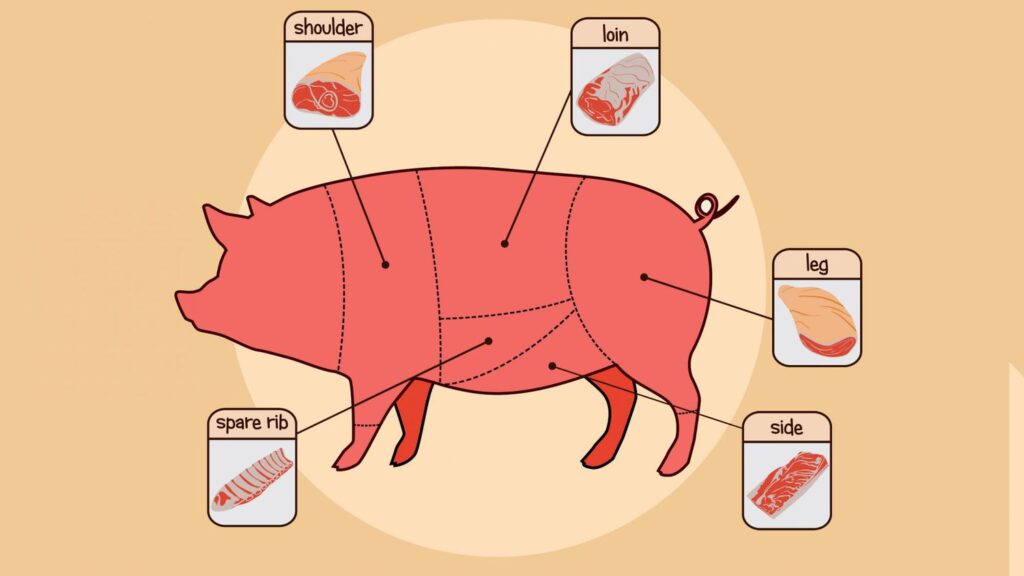
When it comes to cooking pork meat, selecting the right cut for your dish is essential. From juicy pork chops to tender roasts, the variety of pork cuts available can be overwhelming. In this pork meat cooking guide, we’ll explore the perfect cuts of pork for every dish and offer tips on how to cook them to perfection.
Why Choosing the Right Cut Matters
Understanding the different pork cuts and their characteristics can make or break your meal. Whether you’re slow-cooking, grilling, or frying, the right cut ensures that your pork meat is tender, juicy, and full of flavor.
- Lean cuts like tenderloin are ideal for quick cooking methods like grilling or sautéing.
- Fattier cuts like pork belly or shoulder are best for slow-cooking or roasting, where the fat melts into the meat, keeping it moist.
1. Pork Tenderloin: Best for Quick Meals
If you’re short on time but still want a flavorful meal, pork tenderloin is a great option. This is one of the leanest cuts of pork, making it perfect for grilling, pan-searing, or roasting.
- Cooking Tips: Marinate the tenderloin for extra flavor and cook it quickly over high heat to keep it tender and juicy.
- Best Dishes: Stir-fries, grilled tenderloin, or pork medallions.
2. Pork Loin: Perfect for Roasting
Another versatile cut of pork meat is the pork loin, which is often sold boneless and is ideal for roasting. It’s leaner than pork shoulder but still juicy and flavorful when cooked correctly.
- Cooking Tips: Season with herbs and roast at a medium temperature. Let it rest before slicing to retain the juices.
- Best Dishes: Roasted pork loin, stuffed pork loin, or pork loin sandwiches.
3. Pork Chops: A Classic for Grilling
Pork chops are perhaps the most well-known cut of pork meat and can be cooked in a variety of ways. From thick-cut bone-in chops to thin boneless chops, these are perfect for grilling, pan-frying, or baking.
- Cooking Tips: Brine your chops before cooking to ensure they stay juicy. For bone-in chops, cook them slowly to keep them tender.
- Best Dishes: Grilled pork chops, breaded pork chops, or baked pork chops.
4. Pork Shoulder: Best for Slow-Cooking
When it comes to slow-cooked dishes, pork shoulder is a cut you can’t go wrong with. This cut is well-marbled with fat, making it perfect for long, slow cooking methods that break down the meat and render it tender and flavorful.
- Cooking Tips: Use a slow cooker or low oven temperature to braise the meat until it falls apart.
- Best Dishes: Pulled pork, carnitas, or pork stew.
5. Pork Belly: The Star of Crispy Dishes
If you’re looking for something rich and decadent, pork belly is the way to go. This cut is full of flavor and fat, making it perfect for roasting or frying to achieve a crispy exterior and melt-in-your-mouth tenderness.
- Cooking Tips: Roast the pork belly at a high temperature to get crispy skin, then lower the heat to cook the inside.
- Best Dishes: Crispy pork belly, braised pork belly, or pork belly ramen.
6. Pork Ribs: A BBQ Favorite
No pork meat cooking guide would be complete without mentioning pork ribs. Whether you prefer baby back ribs or spare ribs, these cuts are perfect for grilling or smoking. Slow-cooking them will give you tender, fall-off-the-bone meat.
- Cooking Tips: Rub your ribs with spices and cook them low and slow for the best results.
- Best Dishes: BBQ pork ribs, smoked ribs, or braised ribs.
Cooking Techniques to Perfect Your Pork Meat
- Grilling: Ideal for cuts like pork chops, tenderloin, and ribs. Use medium heat to avoid drying out the meat.
- Roasting: Great for pork loin and pork belly. A slow roast will ensure even cooking.
- Slow-Cooking: Best for pork shoulder and ribs. This method allows the fat to break down, giving you melt-in-your-mouth tenderness.
- Searing and Braising: Perfect for tougher cuts like pork shoulder. Start by searing the meat to lock in flavors, then slow-cook in liquid.
How to Ensure Juicy, Tender Pork Every Time
Cooking pork meat correctly is key to keeping it juicy and tender. Here are a few tips:
- Don’t overcook: Use a meat thermometer and cook pork to an internal temperature of 145°F (63°C).
- Rest the meat: Let the pork rest for a few minutes after cooking to allow the juices to redistribute.
- Marinades and brines: These can help tenderize the meat and add flavor.
Conclusion: Mastering the Art of Pork Meat Cooking
With this Pork Meat Cooking Guide, you now know how to select the best cuts for every dish. Whether you’re preparing a weeknight meal or a special occasion dish, choosing the right cut and cooking it properly ensures a delicious result every time. Experiment with different cuts, and don’t be afraid to try new cooking techniques.
Cooking with pork meat is a rewarding experience that brings out deep flavors and textures, making it a versatile and essential ingredient for any kitchen.
This blog includes your keyword “Pork Meat Cooking Guide“ and phrases like “pork meat,” “pork cuts,“ and “cooking pork meat“ to help optimize it for search rankings while providing useful and engaging content for readers.
